

Florida's Iconic Pink Hotels: Plaster, Pigment and Prestige
There was a time, when Florida was less a destination and more a promise, when grand hotels rose from sand and scrub, finished not in plain white, but in shades of blush, coral, and sun-faded rose. These were not accidental colors. They were deliberate. Crafted in lime and pigment, shaped by hand, and designed to glow against the coastal light, Florida’s pink hotels became symbols of a new kind of American luxury with equal parts elegance, escapism, and ambition.

Today, some of these landmarks still stand in their full glory, while others wait quietly for restoration, their plastered walls holding onto a legacy built not just of style, but of craftsmanship that was meant to endure.
The color itself wasn’t just fashion. It was function, tradition, and a bit of ingenuity. Many of these hotels were built in the Mediterranean Revival style, where plaster wasn’t merely a finish but the defining surface. Lime-based plasters, often mixed with natural aggregates like coquina shell or sand, were tinted with mineral pigments that produced those signature warm tones. Under Florida’s intense sun, stark white can feel harsh, but soft pinks and corals absorb and reflect light in a way that gives these buildings depth and warmth throughout the day. Over time, salt air, humidity, and the natural aging of lime further soften the finish, creating that unmistakable glow that no modern coating quite replicates.

By the 1920s, Florida was in full stride with rail lines pushing south, land booms reshaping coastlines, and developers racing to create destinations that felt both exotic and permanent. These pink hotels weren’t modest structures; they were statements. Built to impress winter visitors and northern investors alike, they combined Old World influence with New World optimism with arcades, courtyards, ornamental plasterwork, and façades designed to be seen as much as experienced. Behind the scenes, skilled craftsmen shaped these buildings by hand, layering plaster over masonry and forming details that gave each property its identity. It was fast and ambitious work, but at its best it was also enduring.
Some of these hotels have been carefully preserved, their finishes maintained or restored with an understanding of the materials that gave them life in the first place. Others have not been as fortunate being left to weather, altered with incompatible materials, or simply waiting for the right moment and the right hands to bring them back. Together, they tell the full story of Florida’s pink hotels not just of glamour, but of survival.
__________________________________________________________________________________________
West Coast Icon - The Don CeSar (St. Pete Beach)
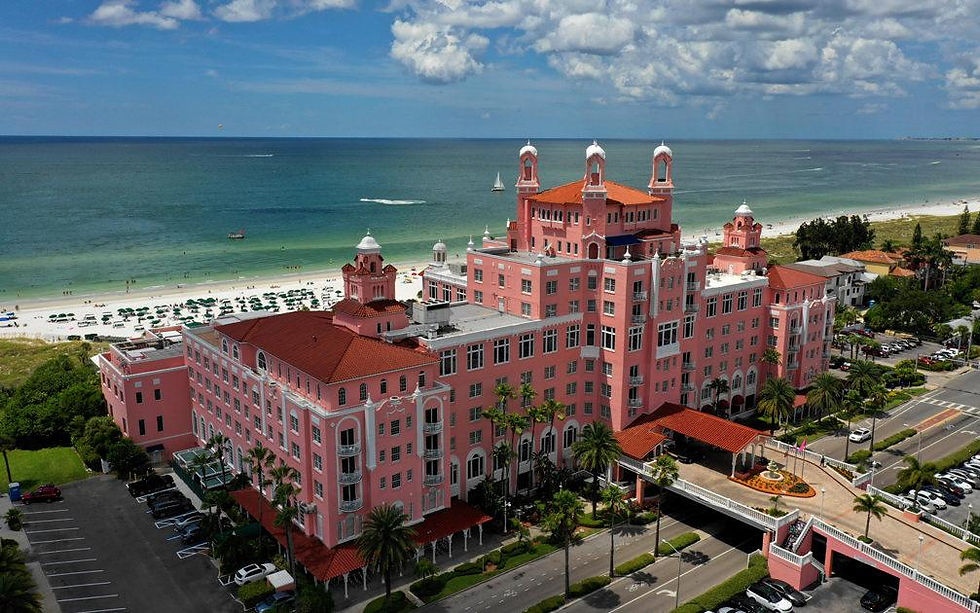


Opened in 1928, the Don CeSar (also known as The Pink Palace) stands as perhaps the most recognizable of Florida’s pink hotels it is a Gulf Coast landmark whose scale and presence still define the shoreline. Its soft rose
façade, arched openings, and ornamental detailing reflect the height of the Mediterranean Revival movement, where plaster wasn’t just a surface but a crafted finish.
Over the years, the building has seen periods of decline and renewal, but it remains a clear example of what’s possible when restoration respects the original materials and intent. The color, the texture, and the way the light moves across the surface all continue to work because the fundamentals were never lost.
__________________________________________________________________________________________
East Coast Presence - The Breakers (Palm Beach)


On Florida’s east coast, The Breakers stands in a class of its own. Rebuilt in 1926, its pink-toned façade stretches along the Atlantic with a sense of permanence few buildings achieve. Designed by architect Henry DuPont to evoke the great villas of Italy, its plastered surfaces were meant to age gracefully in the coastal environment.
Decades of careful stewardship have allowed it to remain not only intact, but relevant, and proof that when these materials are understood and maintained properly, they can endure for generations.
__________________________________________________________________________________________
A Gulf Coast Revival Story - Hacienda Hotel (New Port Richey)


Smaller in scale but no less significant, the Hacienda Hotel tells a different kind of story, one of revival. Built in 1927, it is often counted among Florida’s iconic pink hotels, its color tied closely to the surrounding landscape and coastal light.
Its restoration highlights the difference between simply repairing a structure and truly restoring it by bringing back depth, texture, and character that only traditional plaster systems can provide. When done right, the result doesn’t feel recreated, it feels rediscovered.
_______________________________________________________________________________
Saved from the Brink - Vinoy (St. Petersburg)
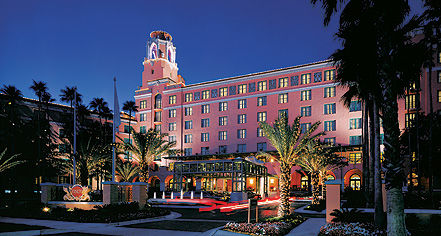


Opened in 1925, the Vinoy is one of the clearest examples of how close these landmarks can come to disappearing. Originally designed by Wallace A. Elliott.
After decades of decline and closure, the building underwent a major restoration in the early 1990s that
brought it back from the brink.
Its return demonstrated that even heavily deteriorated structures can be revived when the work is approached with care and respect for the original materials. Restoring not just the building, but its place in the community.
_______________________________________________________________________________
A Story Still Being Written - Harder Hall (Sebring)

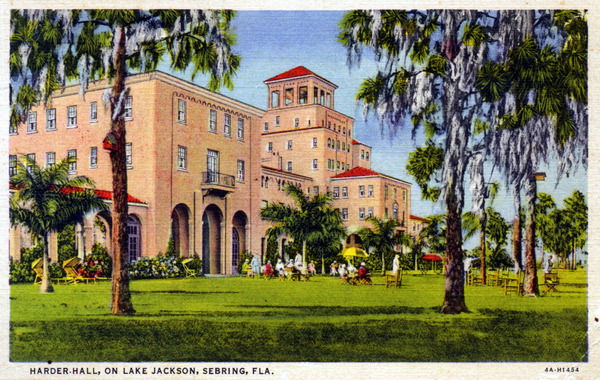

Built in 1926 during Florida’s land boom, Harder Hall once stood as a centerpiece of luxury in central Florida. Designed by Harvey J Van Sweringen it had sat for years. It sat quiet with its faded pink exterior reflecting the effects of time without the level of care these buildings require.
Today, that story is beginning to shift. The property is now undergoing restoration efforts, signaling a renewed commitment to bringing the building back into active use. Efforts like this reflect the kind of long-term thinking required to preserve structures that were never meant to be temporary.
Even in its worn state, the building has held onto its character like its proportions, its details, and its craftsmanship. With the right approach, it stands to once again take its place among Florida’s notable historic hotels.
_______________________________________________________________________________
Still Waiting - Mayfair Hotel (Sanford)


The Mayfair Hotel, opened in 1926, remains one of Florida’s quieter landmarks. Once a winter retreat designed by Fitzhugh Lee Chestnut, it now sits in a state of pause with its finishes worn, but its structure intact.
Buildings like this were built to last, but not to be neglected. The bones are there and the character remains; it simply awaits the right vision and the right approach to bring it back.
_______________________________________________________________________________
Florida’s pink hotels were never just about color. They were about presence and about creating places that felt permanent in a landscape still being defined. Built with lime, pigment, and the hands of skilled craftsmen, they were designed to age, to soften, and to endure.
Some have been preserved with that understanding, others have been brought back after years of neglect, and a few are still waiting. But all of them share the same foundation: materials and methods that, when respected, can last far beyond their era.
For those who understand these buildings, the work is not about changing them, it’s about bringing them back.
Olde World Walls & Ceilings works to preserve that tradition by restoring historic plaster and masonry, respecting the methods the orginial plasterers used. Because if you don't understand how they were built, you're not bringing them back right.


