

PLASTERERS ARMS
Updated: Sep 1
Ah, there you are, step inside and mind your head.
I’m Old Tom, and I’m here to introduce you to a fine old Britian tradition: pubs named for the hardworking plasterers, or spreads as we call ourselves, who built this country and who knew their way around a hawk and trowel.

There have been Plasterers Arms scattered about Britian for generations. Some are still pulling pints, some are long gone, and I’ve taken it upon myself to keep track of the lot.
Come along then, first stop, Hoylake.

So the story goes, in 1836 Mrs. Youds had a husband named John, and John was a plasterer…
Trouble was, John had a habit of wandering off after work to the local pubs and taking his time coming home. Mrs. Youds came up with a practical solution. She turned the ground floor of their own home into a pub.

If John was going to wander off for a pint, she might as well make sure he and his mates didn’t have far to wander.
Fair play to Mrs. Youds. Some women would send a man out for a pint. She brought the pint home and charged him for it.

The pub still carries the Plasterers Arms’ crest and motto of
“Let Brotherly Love Continue.”
Fine words. Just keep your hands off
another man’s trowel.
And to think, nearly two centuries later...

The Plasterers Arms is still there, still serving pints.
Hoylake has another claim to fame: Royal Liverpool Golf Club is just down the road, where The Open has been played thirteen times, from 1897 to 2023.
Right then, that’s Hoylake sorted. We’re off to Norwich. This one has earned its place on our tour for another reason. Norwich takes its beer seriously, and so does this pub.

See those handles on the bar? Those are handpulls, or beer engines. They draw the ale up from the cool cellar below. A proper bit of machinery, if you ask me.

Today the pub is still standing and still serving. Not bad for a place that’s been pulling pints since 1822.

Right then. Another pint, a few nibbles, and we’ll see what the next pub has to say for itself.
In the historic market town of Winchcombe, in the heart of the Cotswolds with its honey-colored limestone and rolling hills, is this Plaisterers Arms, a coaching house still to this day. A place where stagecoaches stopped, where horses were changed and travellers could eat, drink and rest before continuing their journey.

And before you ask, Plaisterer is no different trade. It’s simply the old spelling of plasterer. We’ve been around long enough to collect a few spellings along the way.

On we go. Next stop, Abingdon.
The Plasterers Arms stood near St. Helen’s Church, which gave it one of those proper English-pub settings that looks as though someone planned it that way.
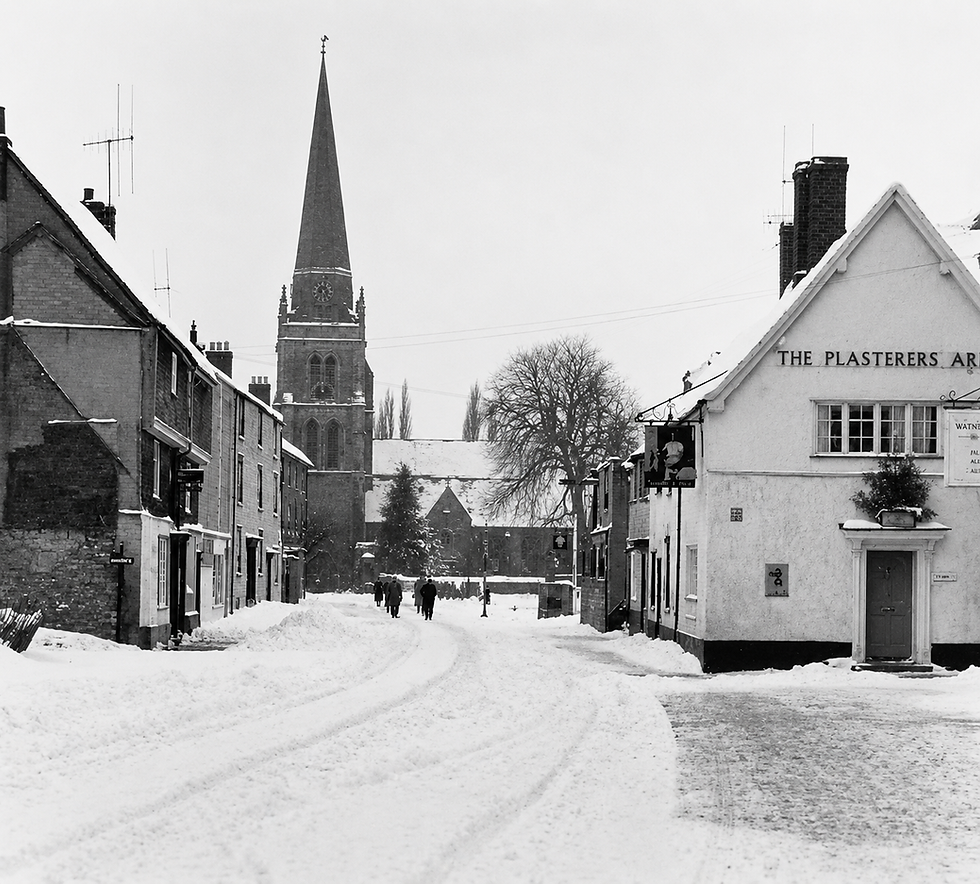
And then there were the charabancs, those early motor coaches built for outings and excursions.

Think of them as the tour buses of their day, only with more fresh air and less suspension.
The building’s still there, it just isn’t a pub anymore. Shame, really. I’d have liked to see what they were pouring.
Mind you, not all of the pubs were so lucky. Some Plasterers Arms have vanished altogether, leaving little more than a photograph, an old address or somebody’s memory behind.

So before we carry on, let’s raise a glass to the lost ones.
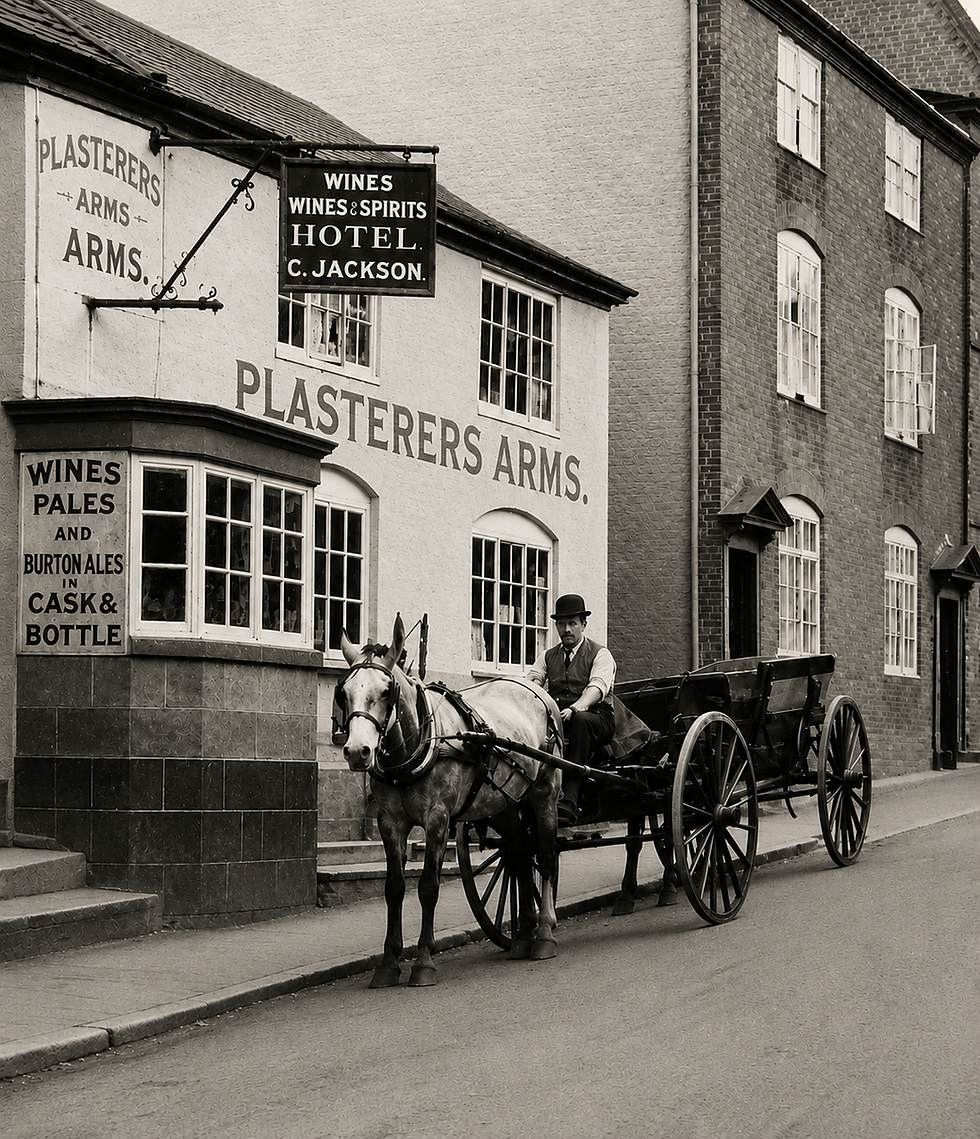
Burton-On-Trent was a brewing town through and through, so the Plasterers Arms was hardly short of competition. Its roughcast exterior gave the building a solid workmanlike look, which seems rather fitting for a pub carrying our trade’s name.

Nothing fancy. Roughcast outside, plasterers inside and plenty of ale. Hard to argue with that.
Next comes Warwick. The Plasterers Arms once stood at 52 Avon Street and was serving the neighbourhood by at least 1874, tucked among the terraced houses.
Oxford’s Plasterers Arms stood on Marston Road from 1827. The pub survived in one form or another for nearly 180 years before closing in 2005.

Nearly 180 years of pints. You’d think that might earn a building a bit of job security.
Last of our lost ones is Reading. The Plasterers Arms on Rupert Street was a proper neighbourhood pub, with a public bar for one sort of evening and a parlour for something a little quieter.

Parlour or bar. Nice to be given a choice. Which door depends on who you’re trying to avoid.
And this fine British tradition continues with other trades proudly lending their names.


And it isn’t just the trowel trades. Even the sparkies had an Electricians Arms.
Fair enough. We can’t have all the good pub names.
Well then, that’s enough pubs for one day. I’d best leave you to it before something reminds me of another story.

Funny thing though…
That does remind me of another story I could tell you about.
Well, until then, Cheers!


